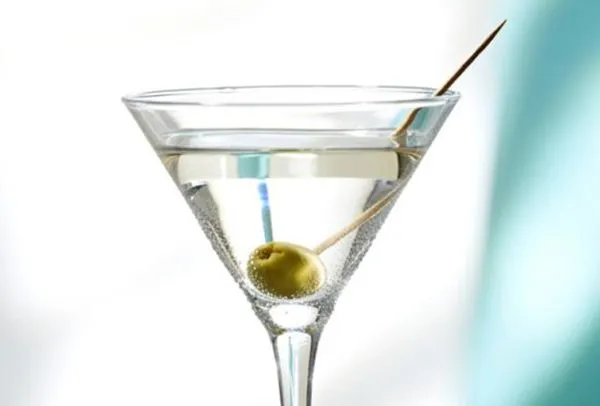
Dry Martini
- Deadly
- dry
A dry, seriously strong cocktail, stirred until cold, served in a martini glass.
Serve in: martini glass
Ingredients
- 2.5 ozLondon dry gin
- 0.5 ozdry vermouth
- 1olivesoptional
- Ice cubesoptional
How to Make a Dry Martini
Instructions
- In mixing glass or cocktail shaker filled with ice, combine gin and vermouth.
- Stir well, about 30 seconds, then strain into martini glass.
Garnish
Decorate with olive or lemon twist and serve.
Tips & substitutions
- Chill everything, including the gin and the vermouth, and stir for a good 30 to 45 seconds; temperature and dilution are practically the only variables you control here. If you have not tried a Martini at two parts gin to one part vermouth recently, do it once before deciding you like it bone dry.
- No gin? Try vodka, tequila or white rum.
The glass
Serve this one in a martini glass. A martini glass is a stemmed glass with an inverted cone bowl, mainly used to serve straight-up cocktails. The term martini glass is often used interchangeably with cocktail glass, despite their differing slightly.
Did you know
No cocktail has been argued about more, and no cocktail has a less settled origin. The likeliest ancestor is the Martinez, a sweeter mixture of Old Tom gin, sweet vermouth, maraschino and bitters that appears in bartending manuals of the late 1880s, including the posthumous 1887 edition of Jerry Thomas's guide. Harry Johnson's manual of 1888 lists a Martine of similar shape. From there the drink lost its sweetness by degrees as dry vermouth from France and drier London gins became available.
Specific claims abound and none is conclusive. The Italian bartender Martini di Arma di Taggia at the Knickerbocker Hotel in New York is often credited with the modern dry version around 1911 or 1912, with an original ratio nearer to equal parts than anything drinkers would recognise today. The town of Martinez, California claims it too, as does a competing story involving a miner and a bartender. The vermouth house Martini and Rossi is a tempting explanation for the name, and may well have contributed to it, but no chain of evidence connects the brand to the first glass.
What is beyond dispute is the drying trend. Ratios moved from roughly two to one, to five to one, to the mid-century absurdities where vermouth was waved at the glass, atomised over it, or invoked in prayer. That fashion has reversed; contemporary bartenders generally pour far more vermouth than their grandparents did, on the sensible grounds that a Martini without it is simply chilled gin.
The vodka Martini arrived with the vodka boom of the 1950s and 1960s, and James Bond's insistence on shaking, rather than stirring, gave the drink a line of dialogue more famous than any recipe. Bartenders still mostly stir, because shaking clouds the drink with air and ice shards and blunts its texture, though a very cold shaken Martini has its own defenders. Olive or twist remains a matter of temperament: brine and salt against citrus oil and perfume.