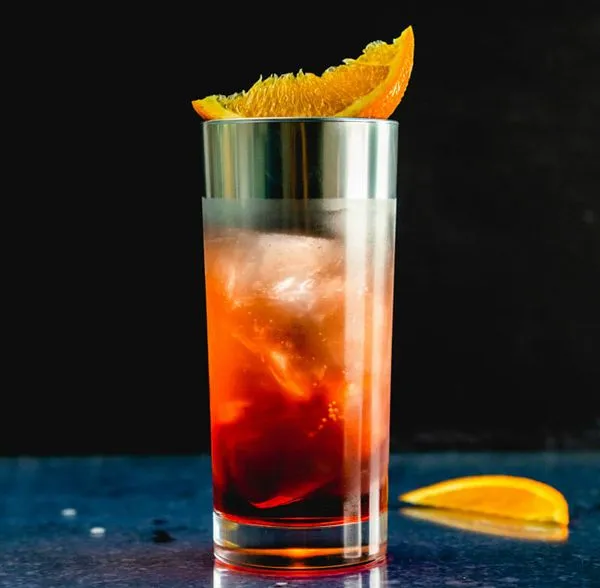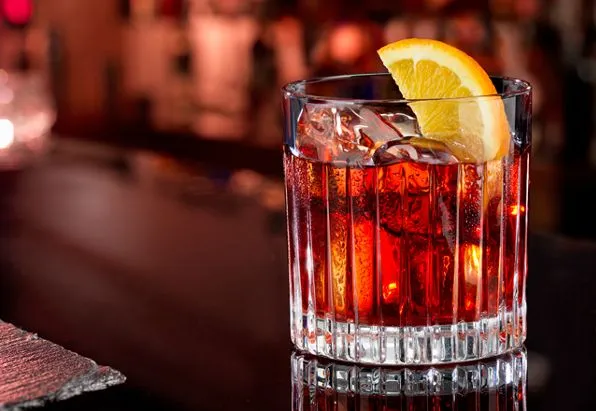
Negroni Cocktail
- Deadly
- bitter
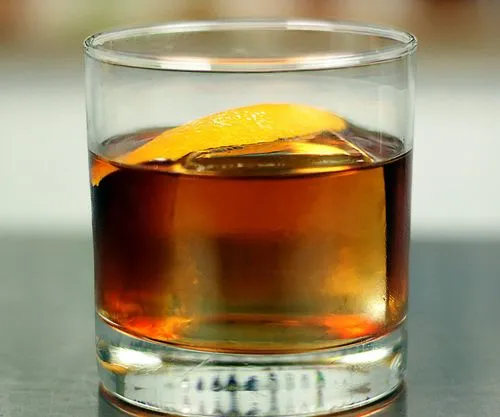
A bitter, seriously strong cocktail, stirred until cold, served in a rocks glass.
Serve in: rocks glass
Ingredients
- 1 ozsweet vermouth
- 1 ozCampari
- 1 ozLondon dry gin
- 1orange peel twistoptional
- Ice cubesoptional
How to Make a Negroni
Instructions
- In chilled cocktail shaker stir together vermouth, Campari, gin, and ice until well combined.
- Strain into an ice-filled rocks glass.
Garnish
Decorate with an orange twist.
Tips & substitutions
- Stir it, never shake: with no citrus or egg in the glass, shaking only clouds the drink and over-dilutes the bitterness that makes it work. If equal parts read too bitter for you, pull the Campari back to three-quarters of an ounce before you start cutting the gin.
- No gin? Try vodka, tequila or white rum.
The glass
Serve this one in a rocks glass. Basically an Old Fashioned glass, but stronger with thicker glass and rim, made from toughened glass to suit drinks that require muddling.
Did you know
Few drinks reward equal parts as gracefully as the Negroni, and few have a murkier birth certificate. The account most cocktail histories accept places it in Florence around 1919: a regular at Caffe Casoni, Count Camillo Negroni, asked the barman Fosco Scarselli to strengthen his usual Americano by replacing the soda water with gin. An orange slice went in where the lemon had been, partly as a signal to the staff that this particular glass was the count's version. Whether every detail of that story holds up, its shape matches exactly how the drink tastes: a bittersweet aperitivo, made stiffer.
Competing claims exist and deserve mention. Descendants of General Pascal Olivier de Negroni have long argued that he mixed the first Negroni in the 1850s, and that version circulates widely. The difficulty is chronological: Campari itself is generally dated to around 1860, which makes a mid-1850s recipe hard to square. Other tellings move the birthplace to Milan and the Campari family's own cafe. None of the rivals has produced documentation strong enough to displace the Florentine account, so it is fair to treat all of them as folklore with differing amounts of paperwork behind them.
What is not disputed is the structure. Gin, Campari and sweet vermouth in equal measure produce something bitter, herbal, faintly sweet and remarkably stable. You can build it half asleep and it will still be good, and that robustness turned it into a template. Swap the gin for bourbon or rye and you have a Boulevardier. Swap it for sparkling wine and you get the Negroni Sbagliato, the 'mistaken' Negroni supposedly born of a bartender reaching for the wrong bottle. Use dry vermouth instead of sweet and the drink turns crisper and paler. Barrel-aged Negronis, white Negronis built on gentian liqueur, and endless amaro substitutions all trace back to the same three-column frame.
Its modern ubiquity is recent. The Negroni spent decades as a relatively parochial Italian aperitivo before the cocktail revival of the 2000s adopted it as a house standard, helped along by its simplicity, its consistency, and the long global promotion of the Italian aperitivo hour.