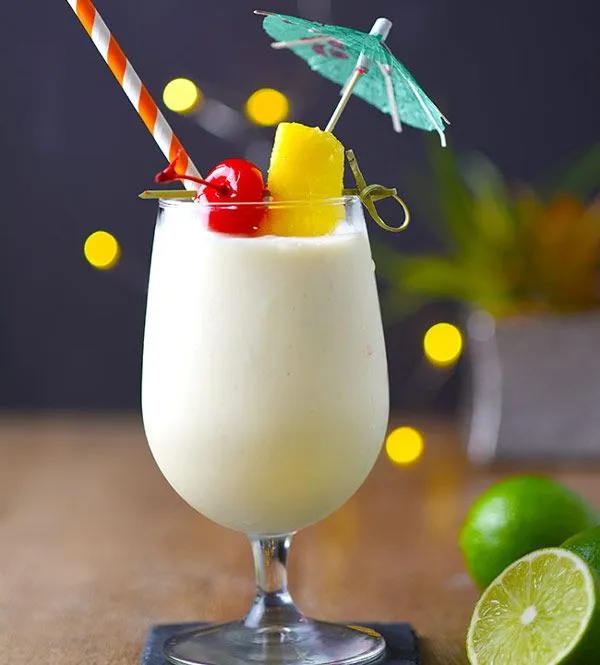
Pina Colada
- Medium
- creamy
- sweet
- tropical
A creamy, sweet and tropical, medium-strength cocktail, shaken over ice, served in a pina colada glass.
Serve in: pina colada glass
Ingredients
- 2 ozwhite rum
- 2 ozpineapple juice
- 1.5 ozcoconut cream
- 1 ozheavy cream
- 1maraschino cherryoptional
- 1pineapple wedgeoptional
- Ice cubesoptional
How to Make a Pina Colada
Instructions
- Add all the ingredients to a shaker and fill with ice.
- Shake well and pour into a Pina Colada glass. You may also blend all the ingredients with crushed ice instead.
Garnish
For decoration use some pineapple wedge and a Maraschino cherry.
Tips & substitutions
- Cream of coconut and coconut milk are completely different products, and substituting the latter will give you a thin, savoury drink; check the label before you buy. Add a squeeze of fresh lime even though the classic recipe omits it, since a little extra acid keeps the sweetness in check.
The glass
Serve this one in a pina colada glass. Sometimes referred to as Poco Grande, this type of glass is commonly used for frozen drinks. It has a similar fluted bowl shape as hurricane, but is shallower and has a longer stem.
Did you know
The Pina Colada is Puerto Rico's national drink, formally recognised as such in 1978, and its modern form depends on a twentieth-century invention: canned cream of coconut. Before a stable, sweetened coconut product existed, the drink as we know it was simply not practical. Coco Lopez, developed in Puerto Rico in the 1950s, solved that problem and made the Pina Colada possible at scale.
Two San Juan establishments claim the drink. The Caribe Hilton credits its bartender Ramon Monchito Marrero with creating it in 1954 after a long stretch of experimentation, and the hotel has promoted that claim ever since. The Barrachina restaurant credits Ramon Portas Mingot with the invention in 1963. Complicating both, the phrase pina colada, literally strained pineapple, appears in Puerto Rican sources well before either date, describing a much simpler pineapple drink. The likeliest reading is that the name is old, the coconut version is a product of the 1950s or 1960s, and the exact hand that first combined them is not recoverable.
Its global fame owes a great deal to a piece of pop music. Rupert Holmes's 1979 song, universally known as the Pina Colada Song, cemented the drink in popular culture at exactly the moment blender drinks were conquering resort bars everywhere. That association is a double-edged inheritance: it made the drink famous and simultaneously made it unfashionable, a shorthand for holiday kitsch.
Made with care, it deserves better. Real pineapple juice, proper cream of coconut and a rum with some character produce a drink that is rich but not cloying, with the pineapple's acidity doing real work against the fat of the coconut. It can be shaken and served over ice or blended; the shaken version tastes brighter and more like a cocktail, the blended one is the beach classic. A dark rum float turns it into a very good drink indeed.