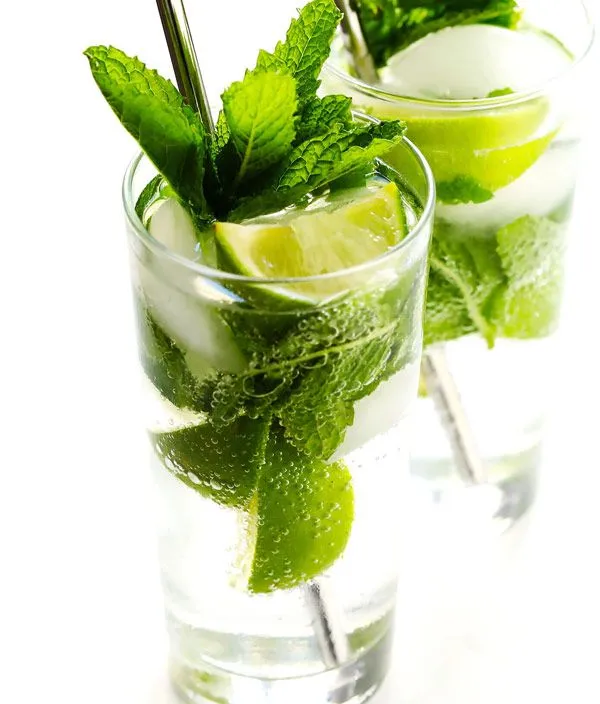
Mojito
- Strong
- citrus
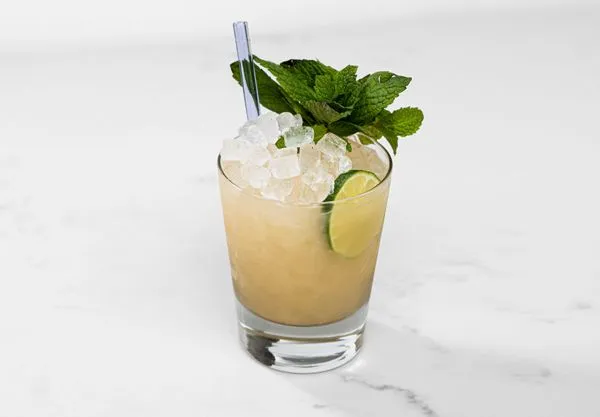
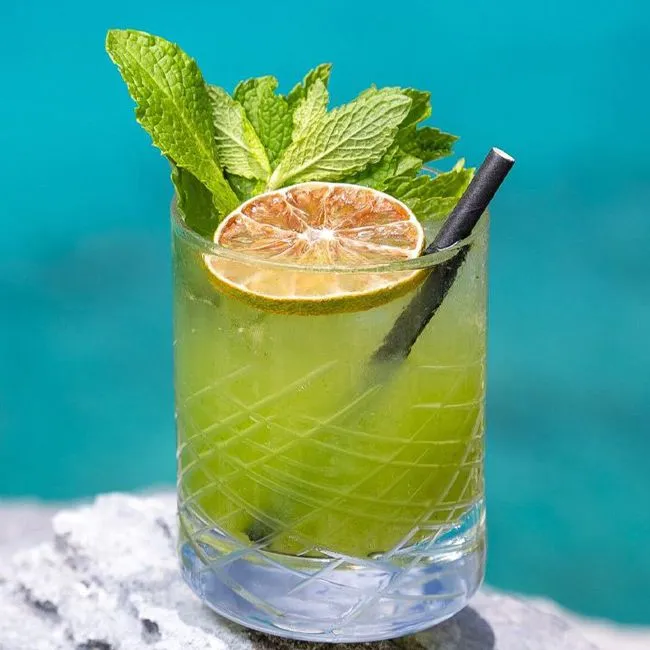
A citrus, strong cocktail, shaken over ice, served in a collins glass.
Serve in: collins glass
Ingredients
- 2 ozwhite rum
- 0.5 ozFreshly squeezed lime juice
- 0.25 ozsimple syrup
- 0.5 ozsoda water
- 10fresh mint
- mint sprigsoptional
- Ice cubesoptional
How to Make a Mojito
Instructions
- In a shaker, lightly muddle the mint.
- Add the simple syrup, lime juice and rum, and fill with ice.
- Shake well and pour (unstrained) into a glass.
- Top with the club soda.
Garnish
For decoration use some mint sprigs.
Tips & substitutions
- Press the mint gently against the side of the shaker rather than grinding it; you want the oils, not shredded leaf, and pulverised mint releases bitter chlorophyll notes. Slap the garnish sprig between your palms before it goes in so its aroma hits you before the first sip does.
- No limes? Try lemons.
The glass
Serve this one in a collins glass. A collins glass is a glass tumbler which typically is used to serve mixed drinks, especially Tom Collins or John Collins cocktails. It is cylindrical in shape and narrower and taller than a highball glass.
Did you know
The Mojito is Cuba's great warm-weather cocktail, and its ancestry runs back further than the name does. The commonly cited forebear is El Draque, a rough mixture of aguardiente, lime, sugar and mint, which legend ties to the crew of Francis Drake in the late sixteenth century as a shipboard remedy for scurvy and stomach ailments. The link is charming but the documentary evidence is thin, and serious writers on Cuban drinking treat it as a good story rather than a proven lineage.
What can be traced is the drink's emergence in Cuban bars in the early twentieth century, once light column-still rum had replaced harsher aguardiente. Havana in the 1920s and 1930s was a boom town for American visitors escaping Prohibition, and the Mojito travelled home in their memories along with the Daiquiri. La Bodeguita del Medio became the address most associated with it. The framed note on that bar's wall attributing a Mojito preference to Ernest Hemingway is famous, but its authenticity is widely questioned and it is generally regarded as an inspired piece of marketing rather than evidence.
The drink's real global explosion came much later, in the 1990s and 2000s, when it became the signature order of a generation of bars, appeared in film, and turned up on menus in places that had never seen a cane field. That popularity came at a cost: the Mojito is labour-intensive to make well and is frequently made badly, which is why so many bartenders quietly dread it.
Its balance is more delicate than its reputation suggests. Rum, lime and sugar form a Daiquiri; the mint and the soda are what make it a Mojito, and both are easy to overdo. Bruised or over-muddled mint turns grassy and bitter, and too much soda flattens the whole thing. Variations abound and mostly work: berry Mojitos, the South Side served straight up without soda, and the Nojito made with soda and lime alone.