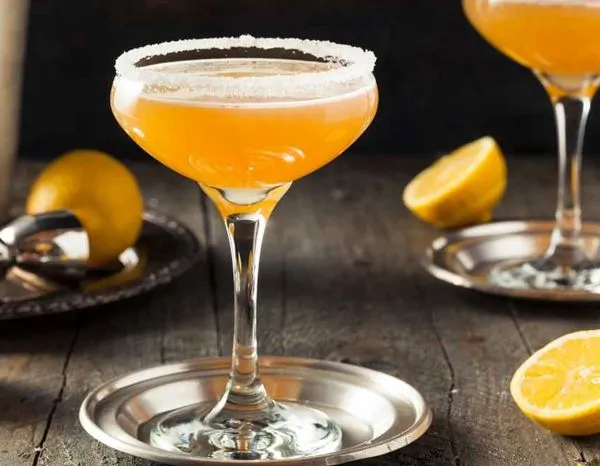
Sidecar Cocktail
- Deadly
- sour
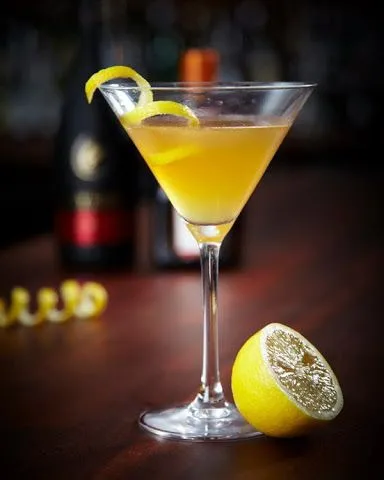
A sour, seriously strong cocktail, shaken over ice, served in a coupe glass.
Serve in: coupe glass
Ingredients
- 1.5 ozCognac
- 0.75 ozorange liqueur
- 0.75 ozFreshly squeezed lemon juice
- sugar
- Crushed iceoptional
How to Make a Sidecar
Instructions
- Coat the rim of a coupe glass with sugar and set aside.
- Add all ingredients into a shaker with ice and shake.
- Strain into the prepared glass.
Garnish
Decorate with an orange twist.
Tips & substitutions
- Quality of orange liqueur matters more here than in almost any other classic, since it supplies all the sweetness; a good curacao or cognac-based triple sec transforms the drink. If you sugar the rim, do it before you shake and coat only the outside, so sugar does not fall into the drink and shift the balance.
- No brandy? Try bourbon or sweet vermouth.
- No lemons? Try limes.
The glass
Serve this one in a coupe glass. Also known as Champagne Coupe or Champagne saucer. Fancy looking glass invented in the mid 17th century in England.
Did you know
The Sidecar arrived at the beginning of the 1920s, and its parentage is split neatly across the Channel. One account places it at Harry's New York Bar in Paris with Harry MacElhone; another credits Pat MacGarry of Buck's Club in London. MacElhone himself credited MacGarry in at least one edition of his own book, which is unusually good manners for a cocktail dispute but does not settle much, since the crediting varied between printings.
What can be pinned down is the drink's appearance in print. It shows up in 1922 in both MacElhone's ABC of Mixing Cocktails and Robert Vermeire's Cocktails and How to Mix Them, which makes it one of the first great cocktails of the post-war era. The name is usually explained by a customer who arrived at the bar in the sidecar of a motorcycle, a story attached to both origin claims and to neither convincingly.
The Sidecar is a sour with an orange liqueur standing in for the sugar, which puts it in the same structural family as the Margarita and the White Lady. That places it at a genuine crossroads in cocktail history, since the same template later carried tequila and gin to global fame.
Its one real controversy is proportion. The English school pours equal parts brandy, liqueur and lemon, which makes a sweet, liqueur-forward drink. The French school, and most modern bartenders, use roughly two parts cognac to one each of liqueur and lemon, producing something drier and much more spirit-driven. Both are historically legitimate; the two-to-one-to-one version is what most people mean today.
The sugared rim is traditional but optional, and it is not merely decorative: it changes the drink by front-loading sweetness on the tongue before the tart liquid arrives. Rim only half the glass and you can have it both ways.