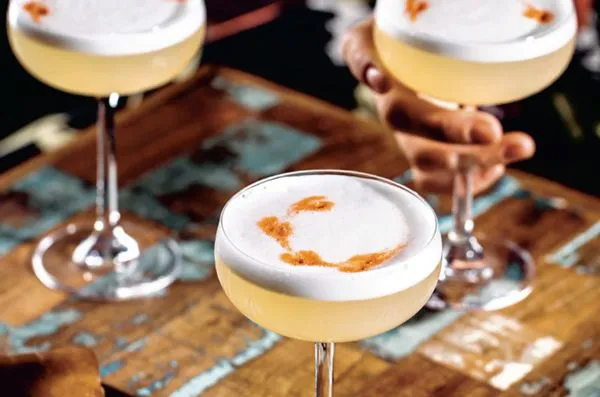
Pisco Sour
- Strong
- sweet
- sour
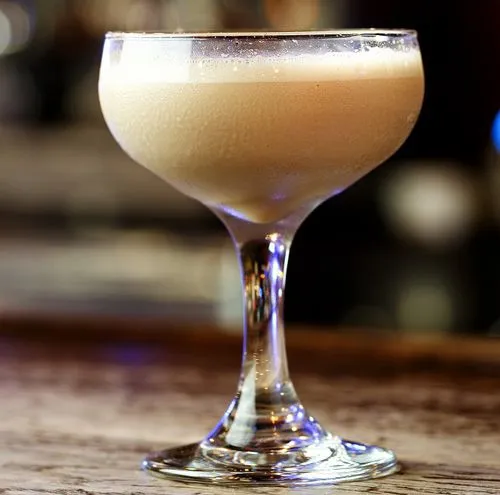
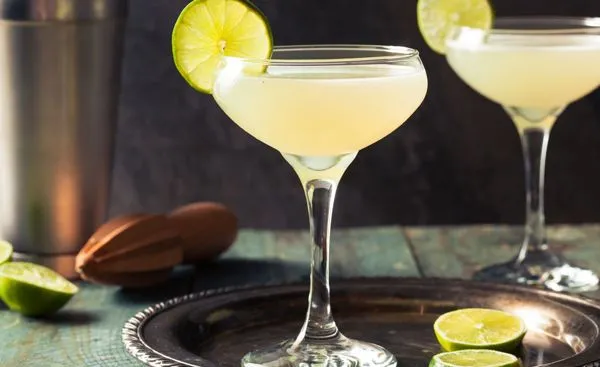
A sweet and sour, strong cocktail, shaken over ice, served in a coupe glass.
Serve in: coupe glass
Ingredients
- 2 ozPisco
- 1 ozFreshy squeezed lime juice
- 0.5 ozsimple syrup
- 1egg white
- 3 dropsangostura bittersoptional
- Ice cubesoptional
How to Make a Pisco Sour
Instructions
- Add all the ingredients into a shaker with ice and shake vigorously.
- Strain into a chilled glass over ice..
Garnish
Decorate with 3 drops of the bitters.
Tips & substitutions
- Dry shake the egg white with the juice and syrup first, without ice, then shake again hard with ice; skipping the dry shake gives you a thin, short-lived foam. Drop the bitters onto the settled foam rather than into the drink, and do not stir them in.
- No brandy? Try bourbon or sweet vermouth.
- No limes? Try lemons.
The glass
Serve this one in a coupe glass. Also known as Champagne Coupe or Champagne saucer. Fancy looking glass invented in the mid 17th century in England.
Did you know
The Pisco Sour sits at the centre of a national rivalry. Both Peru and Chile produce pisco, both claim the spirit as their own, and both claim the cocktail, with the argument extending into trade law and denomination-of-origin disputes. The two piscos are genuinely different products: Peruvian pisco is distilled to proof from grape must and never diluted or aged in a way that alters it, while Chilean pisco permits a wider range of practices including barrel ageing.
The drink's documented origin is Peruvian. Victor Vaughen Morris, an American who settled in Lima, ran Morris' Bar in the city from the mid-1910s, and the Pisco Sour is recorded there in the early 1920s, with surviving references in the bar's own materials and contemporary advertising. The refinements that define the modern version, notably egg white and the bitters dropped on the foam, are often credited to Mario Bruiget, a Peruvian bartender who worked at Morris' Bar, though the attribution is traditional rather than documented in detail. Peru celebrates a national Pisco Sour Day on the first Saturday of February, which tells you how seriously the claim is taken.
Chilean practice produces a noticeably different drink: usually no egg white, no bitters, and often the small, intensely aromatic pica lime rather than the key lime used in Peru. Neither is a corrupted version of the other; they are parallel traditions.
Underneath the nationalism, the Pisco Sour is a textbook sour with an unusually expressive base spirit. Pisco is grape distillate, so it carries floral, muscat-like aromatics that most base spirits lack, and the egg white's job is to hold those aromas in a foam right under the drinker's nose. The bitters dropped on top are not decoration either: they meet you before the liquid does, which is the whole design.
That also means the choice of pisco matters more here than base spirits usually do in a sour. An aromatic Peruvian pisco made from muscat-family grapes gives a perfumed, floral drink, while a non-aromatic variety produces something cleaner and more austere. Neither is wrong, but they make noticeably different cocktails from the same recipe, which is a good reason to try more than one bottle.