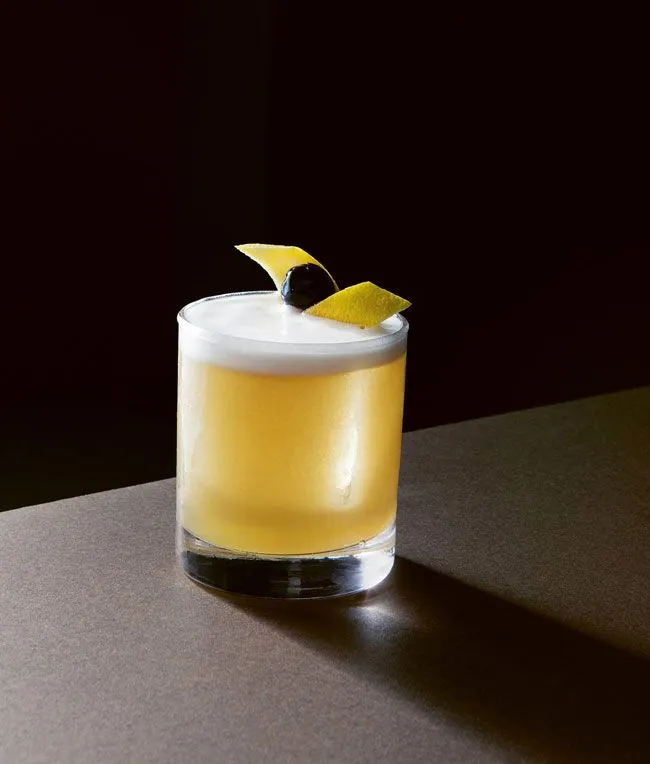
Whisky Sour 2
- Medium
- sour
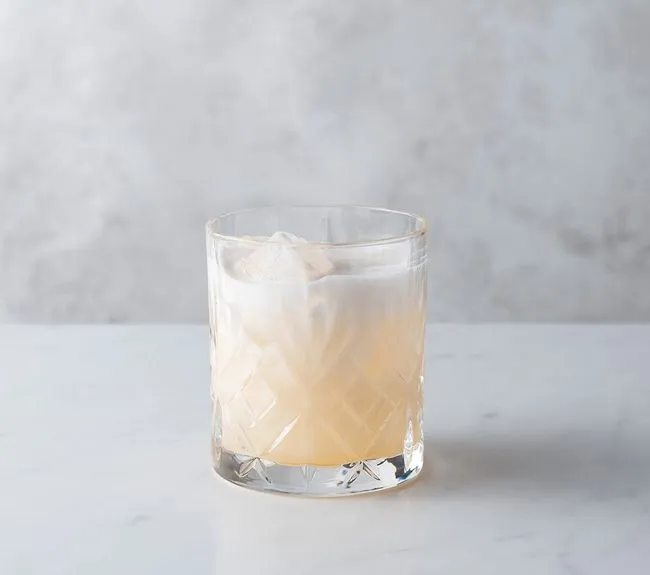
A sour, medium-strength cocktail, shaken over ice, served in an old fashioned glass.
Serve in: old fashioned glass
Ingredients
- 2 ozBourbon Whisky
- 0.75 ozFreshly squeezed lemon juice
- 0.75 ozsimple syrup
- 0.5 ozegg white
- 1 dashangostura bitters
- iceoptional
How to Make a Whisky Sour 2
Instructions
- Dry shake (no ice) the egg white and lemon juice.
- Add simple syrup and whisky to the other tin and shake with large ice cubes.
- Double strain in an old fashioned glass over fresh ice.
- Spray angostura bitters.
Garnish
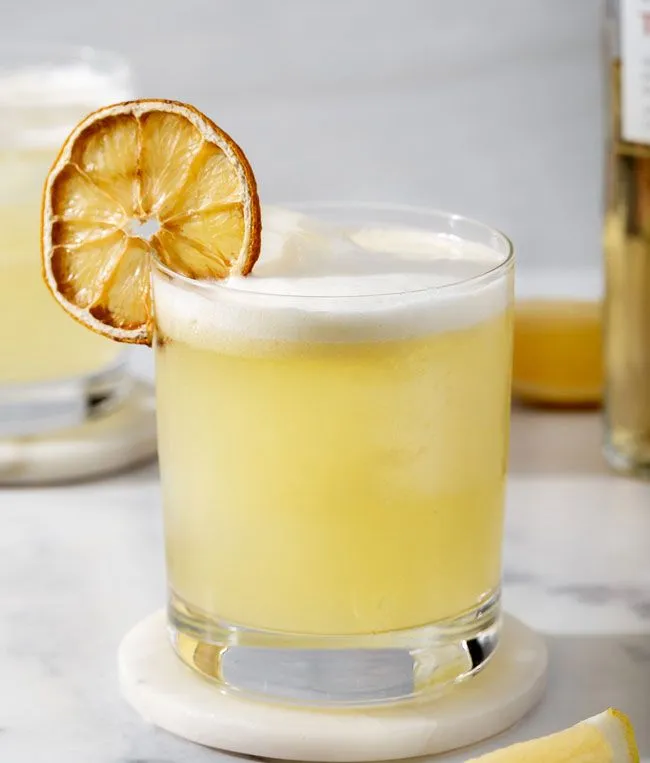
Decorate with a lemon twist and maraschino cherry.
Tips & substitutions
- Dry shake the egg white with the lemon juice first without ice to build the foam, then shake again with ice to chill and dilute; doing it in one step gives you a weak, collapsing head. Double strain into the glass so no ice shards break the foam, and drop the bitters on top rather than mixing them in.
- No whisky? Try scotch or bourbon.
- No lemon juice? Try lime juice.
The glass
Serve this one in an old fashioned glass. The old fashioned glass or rocks glass is a short tumbler used for serving spirits, such as whisky, neat or with ice cubes. It is also normally used to serve certain cocktails, such as the Old Fashioned, from which it receives its name.
Did you know
The sour is the oldest structure in cocktail making, older than the word cocktail applied to anything mixed. It descends directly from ship's punch, that eighteenth-century formula of spirit, citrus, sugar, water and spice that sailors and colonists drank across the Atlantic world. Shrink a punch bowl down to a single glass, drop the water and let ice supply the dilution, and you have a sour.
By the time Jerry Thomas published the first American bartender's guide in 1862, the sour was already a well-established category, with brandy, gin and Santa Cruz rum versions listed. Whiskey sours appear in American print through the following decade, and by the 1870s the drink was common enough to be referenced casually in newspapers. No individual invented it; it is a folk form that many hands arrived at.
Its twentieth-century history is a cautionary tale. The rise of bottled sour mix, a shelf-stable blend of acid and sugar syrup, made the drink cheap and fast to produce and stripped out everything that made it good. For decades the Whisky Sour meant a pale, cloying drink built from a gun, and its reputation collapsed accordingly. Its restoration required nothing more complicated than squeezing lemons again.
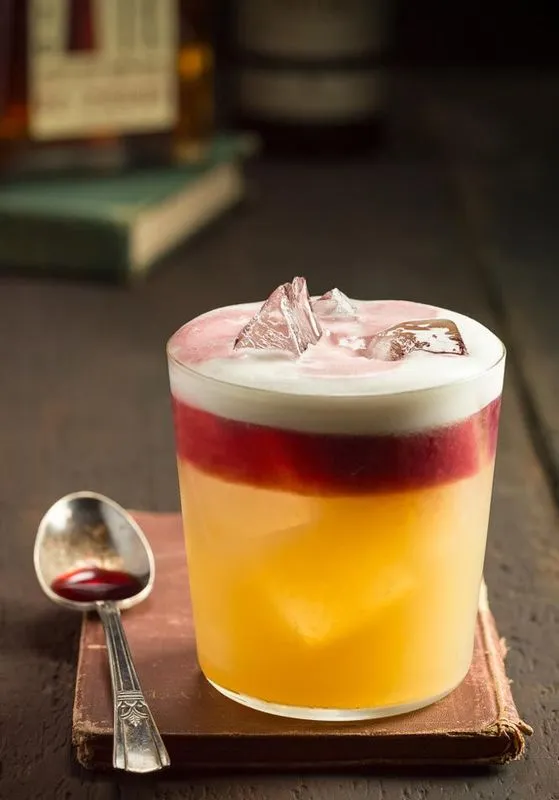
The egg white is optional and worth understanding rather than simply following. It contributes no flavour but changes texture and aroma delivery, giving a silky body and a dense foam that softens the whiskey's edges. The version with egg is sometimes called a Boston Sour; without it, the drink is sharper and more direct. Float red wine on top and you have a New York Sour, which is one of the genuinely great variations, since the wine's tannin and fruit sit beautifully against bourbon.
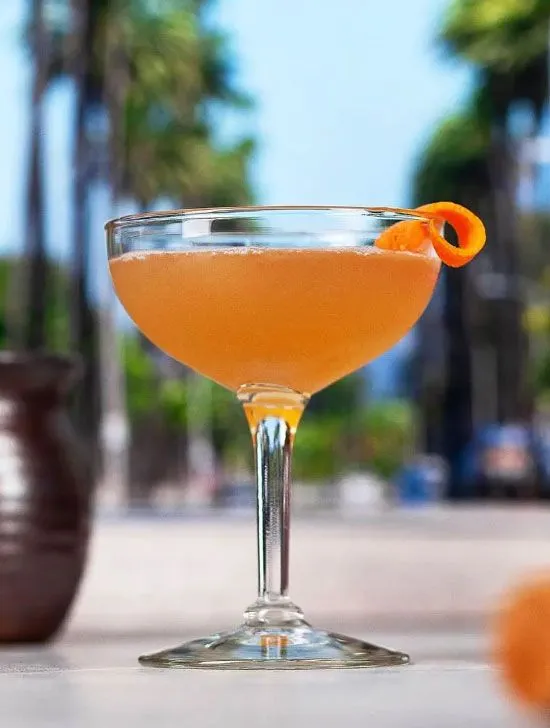
Everything else in the sour family follows the same three columns: swap the base and you have a Daiquiri, a Margarita, a Pisco Sour or an Amaretto Sour.