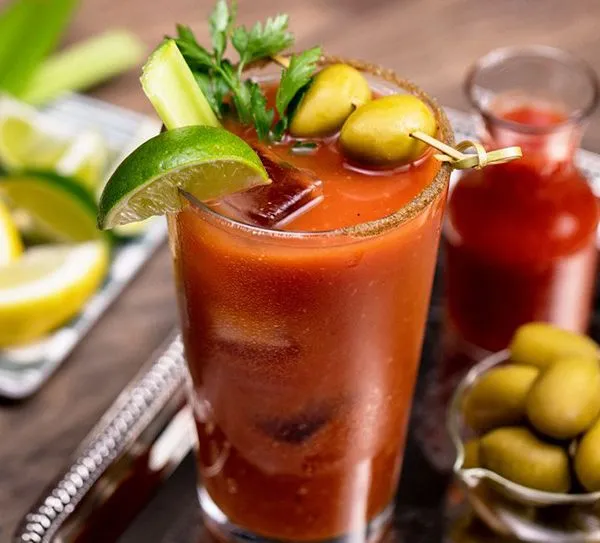
Bloody Mary Cocktail
- Weak
- spicy
- sour
A spicy and sour, light cocktail, shaken over ice, served in a collins glass.
Serve in: collins glass
Ingredients
- 1.5 ozvodka
- 6 oztomato juice
- 0.5 ozFreshly squeezed lemon juice
- 1 tspsea salt
- 1 dashTabasco
- 2 dashworcestershire sauce
- 1celery stickoptional
- 2green olivesoptional
- Freshly ground black pepperoptional
- Ice cubesoptional
How to Make a Bloody Mary
Instructions
- Salt the rim of a tall glass. To do so, pour salt onto a small plate, moisten the rim of the glass on a damp towel and press into the salt. Fill the glass with ice cubes.
- In a cocktail mixer full of ice, combine the vodka, tomato juice, lemon juice, Worcestershire sauce, hot pepper sauce, salt and pepper.
- Shake vigorously and strain into the glass.
Garnish
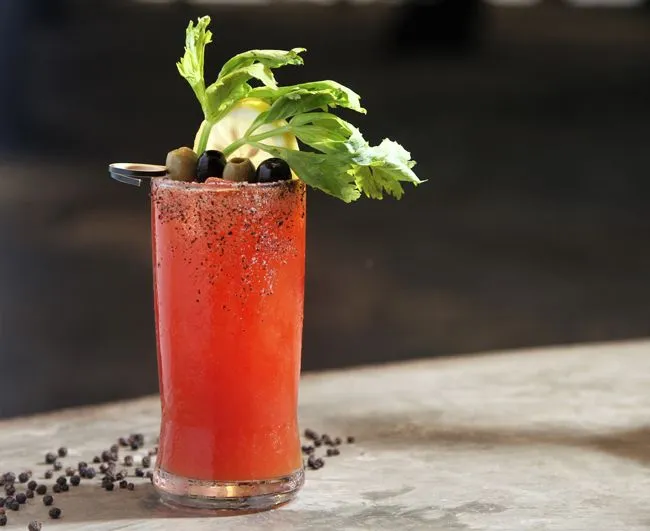
Decorate with a stalk of celery and olives stuck onto a toothpick.
Tips & substitutions
- Roll the drink rather than shaking it hard: pour it gently back and forth between two tins so it mixes and chills without aerating the tomato juice into froth. Season aggressively and taste before serving, since tomato juice mutes salt, acid and heat far more than you expect.
- No vodka? Try gin.
- No lemons? Try limes.
The glass
Serve this one in a collins glass. A collins glass is a glass tumbler which typically is used to serve mixed drinks, especially Tom Collins or John Collins cocktails. It is cylindrical in shape and narrower and taller than a highball glass.
Did you know
The Bloody Mary is the most heavily contested claim in cocktail history, largely because two men spent decades insisting they invented it. Fernand Petiot said he began mixing tomato juice with vodka at Harry's New York Bar in Paris in the 1920s, when both canned tomato juice and Russian emigre vodka had become available there. The American entertainer George Jessel claimed it as his own creation from around 1939 and appeared in advertising saying so. Petiot later offered a diplomatic reconciliation of the two stories, suggesting that Jessel had made the simple mixture and that he had added the seasonings that turned it into a drink. That is probably as close to the truth as anyone will get.
Petiot moved to the King Cole Bar at the St. Regis in New York, where the drink was reportedly renamed the Red Snapper on the grounds that Bloody Mary was too coarse a name for the clientele. Confusingly, Red Snapper now generally means the gin version, which is well worth trying: gin's botanicals meet tomato and spice far more interestingly than vodka's neutrality does.
The name itself has no settled explanation. Queen Mary I of England, a waitress in a Chicago bar, and various Marys of local legend all get proposed, and none can be verified.
What the Bloody Mary really represents is the arrival of the savoury cocktail. It has more in common with a cold soup than with the sour or the Old Fashioned, and it is the only major classic in which salt, acid, heat and umami do the structural work that sugar does elsewhere. That flexibility has made it the most customised drink on any brunch menu, and the ancestor of the Bloody Maria with tequila, the Michelada with beer, and the increasingly baroque garnish arms race of the last two decades.